
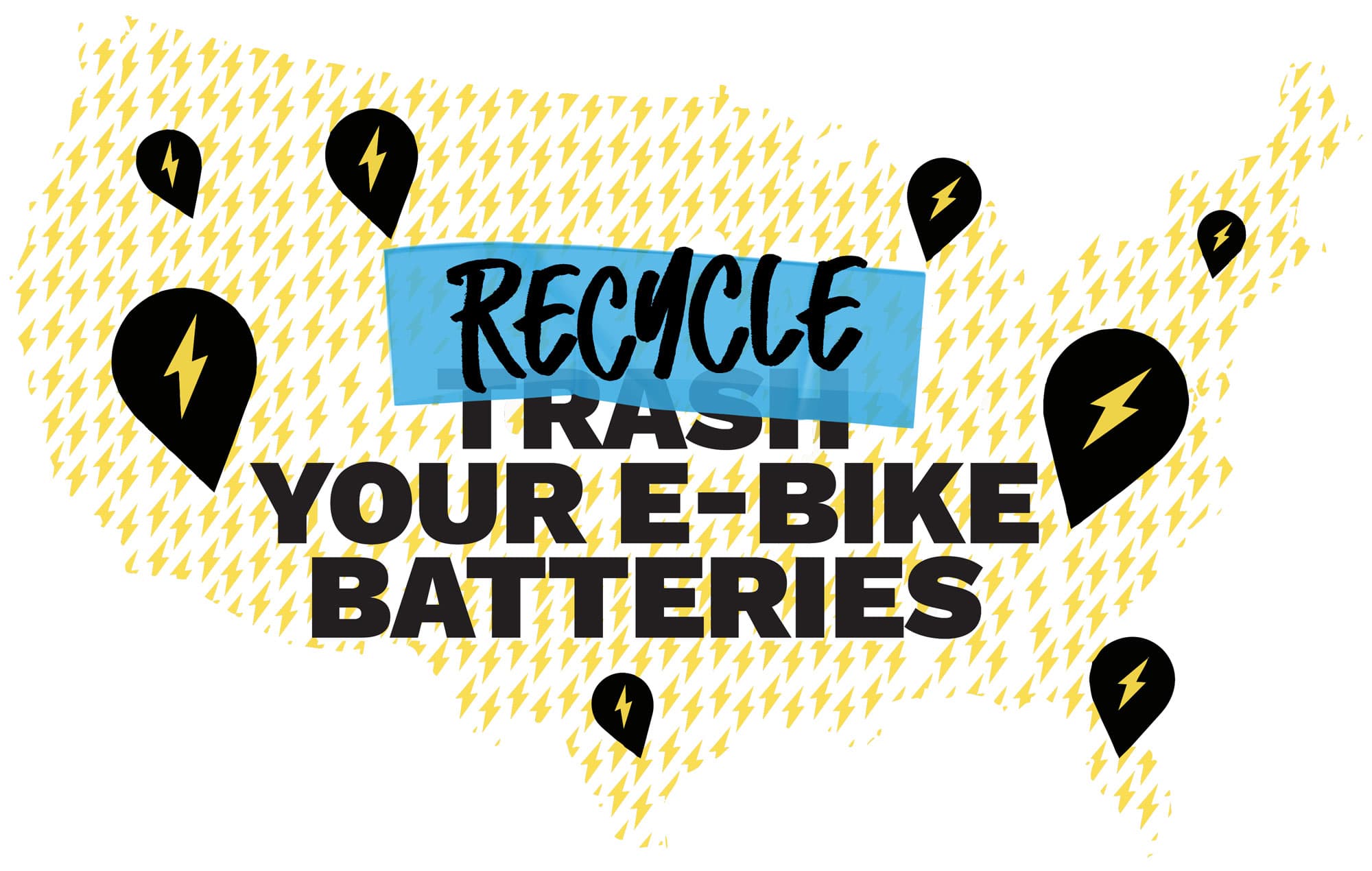
Trash
Your E-bike
Batteries
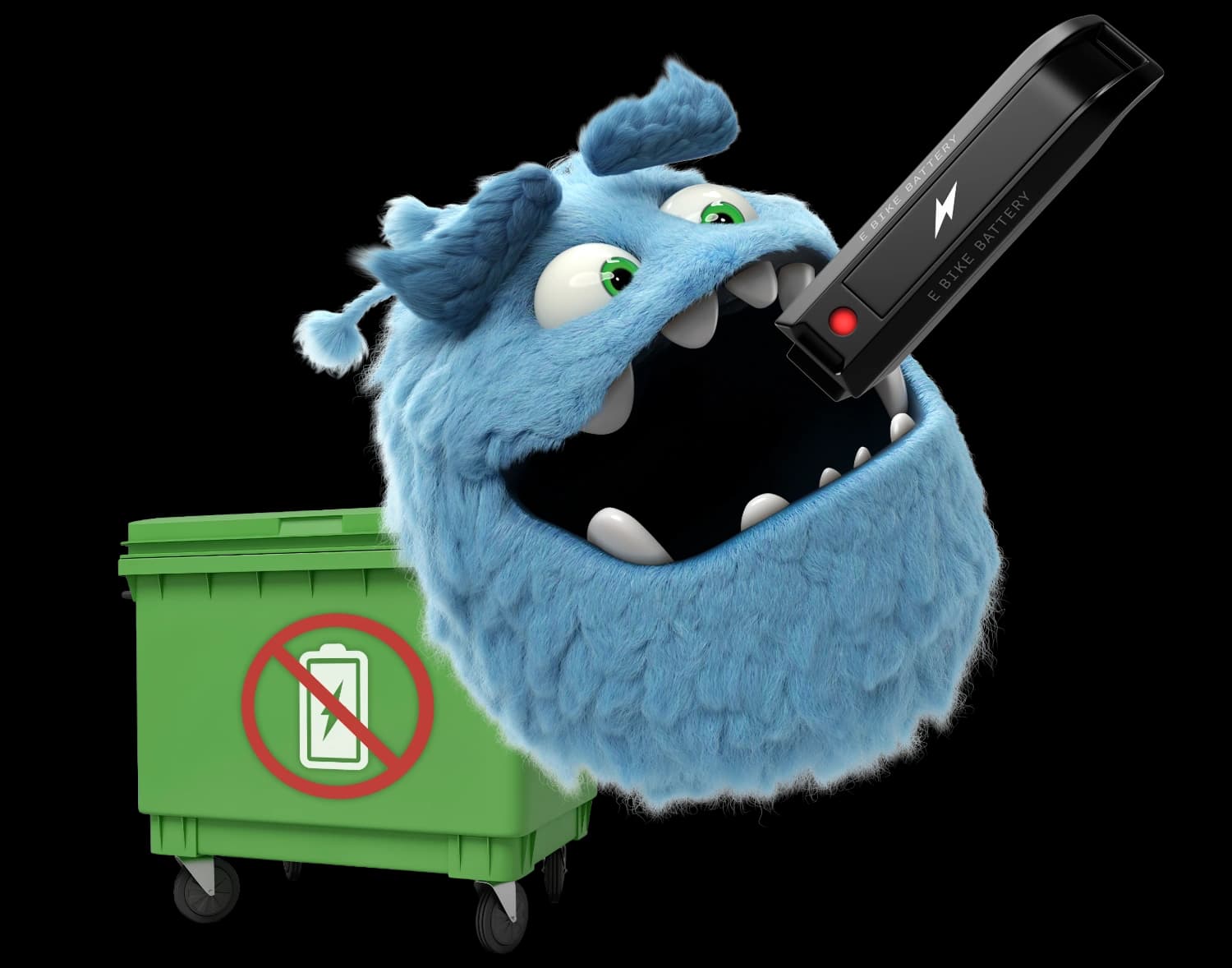
Recycling electric bicycle batteries — one bite at a time.


Meet Watts!
A hungry monster with an appetite for used e-bike batteries.
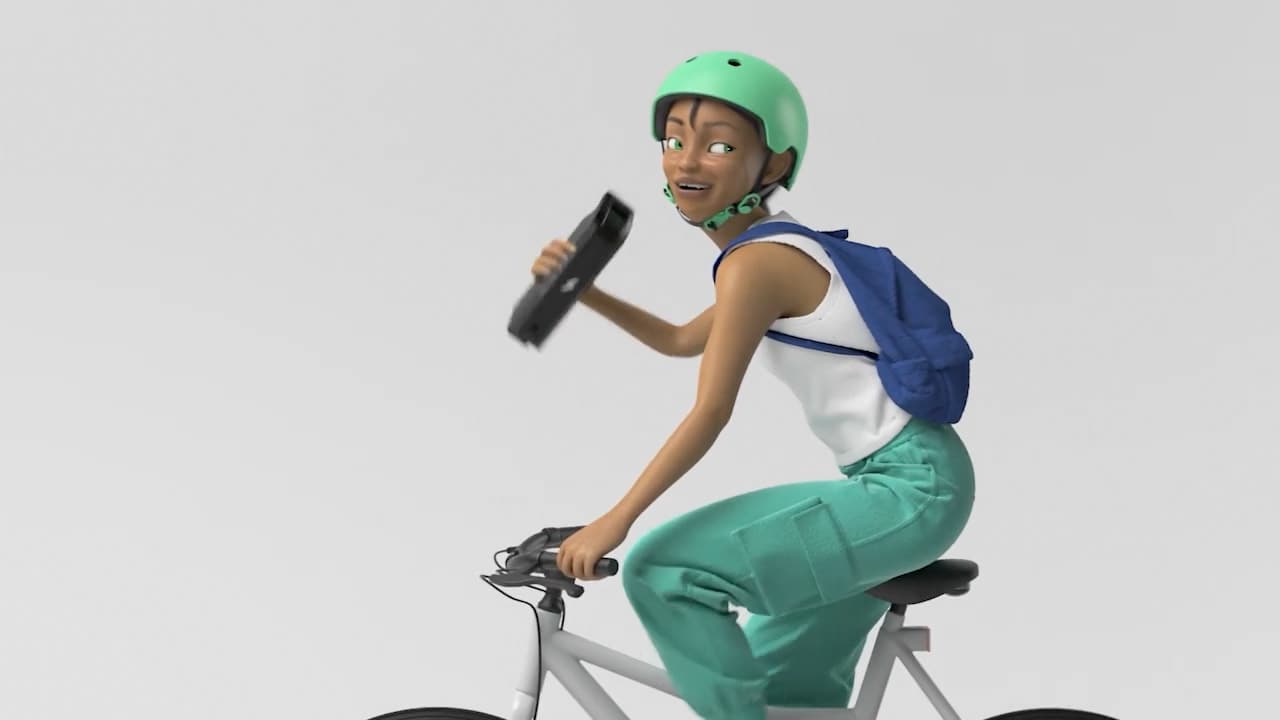
Meet Rey!
A recycling champion driven to give every battery a second ride.
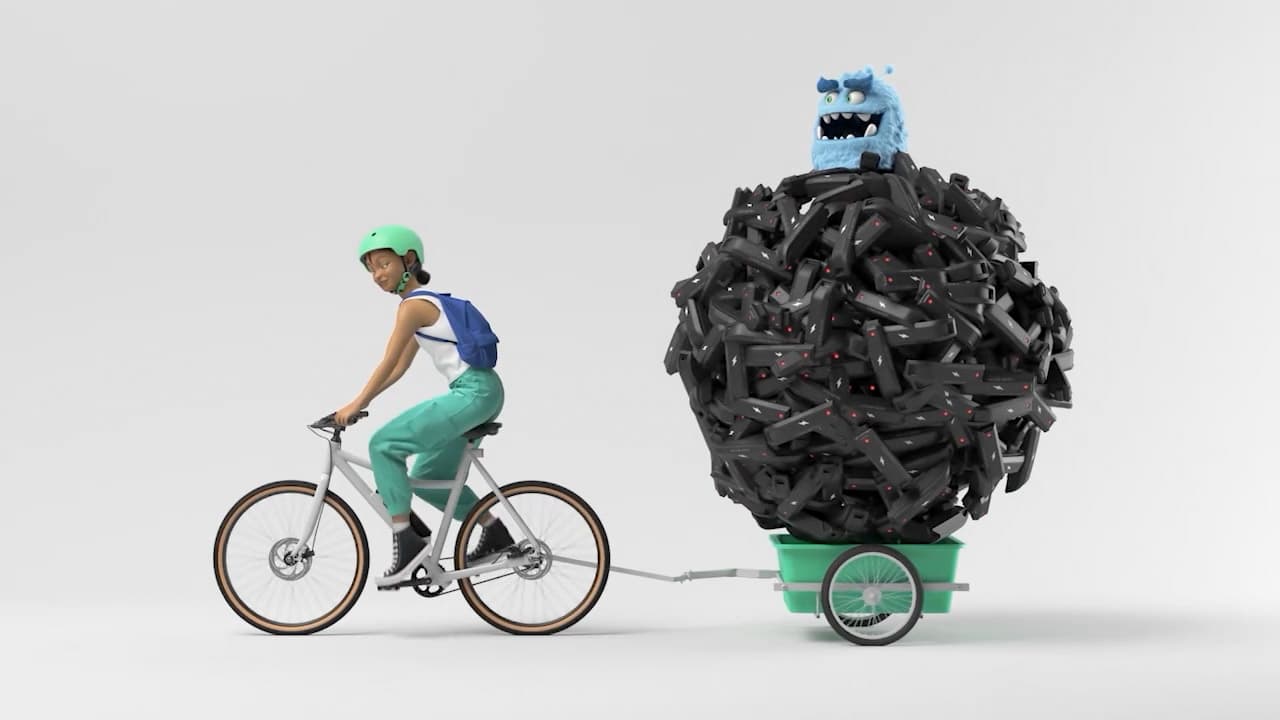
Collecting for a Cause
This dynamic duo is teaming up to end e-bike battery waste.

Help Watts and Rey!
Find a participating retailer and recycle your old e-bike battery.

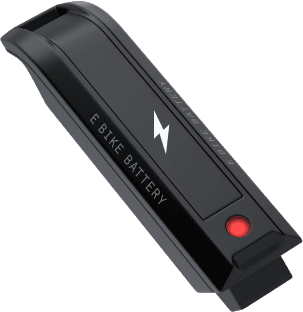
A Battery
Recycling Solution
E-bike battery recycling made simple.
The bike industry came together as the first transportation industry to establish a battery recycling program to reduce negative impacts on our planet by removing e-bike batteries from our waste streams. Thanks to this new program, powered by The Battery Network and endorsed by PeopleForBikes, tens of thousands of pounds of electric bicycle batteries have already been recycled.
Don't Trash Your E-Bike Battery
Keep it out of the dumpster, landfill, or tossed in the back of your garage.
Millions of electric bikes are being ridden on roads and trails across the U.S., helping Americans replace car trips, reduce their personal carbon footprint, and access the countless benefits and joys of the great outdoors. With those bikes, there are also millions of lithium ion batteries that will need to be properly managed at their end of life.
Recycling Batteries Made Easy
Recycling is as easy as 1-2-3.
1. Find your nearest battery drop-off location. 2. Bring in your battery for the team to pack up. 3. Your battery is shipped off to be recycled. Done!
FAQ for Riders
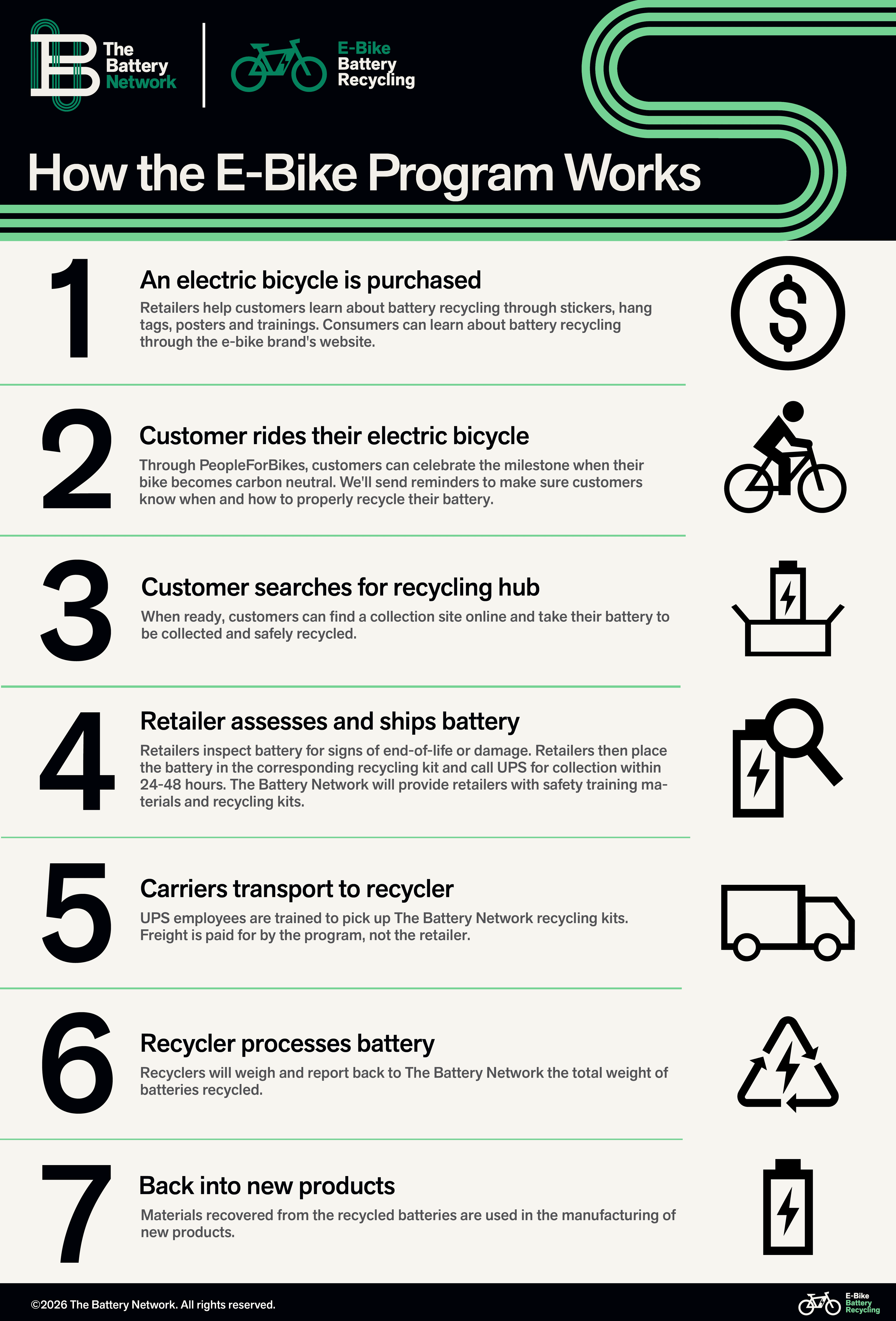
How does electric bicycle battery recycling work?

How does electric bicycle battery recycling work?
Why do electric bicycle batteries need to be recycled?
- More than 12 million electric bicycles (e-bikes) will be sold in the U.S. between 2020 and 2030. That means 12 million batteries powering those electric bicycles will need to be collected and recycled at their end of life.
- To ensure those batteries are safely and responsibly handled and kept out of landfills, more than 40 bike industry leaders from 20 PeopleForBikes member companies united under a sustainability task force and electric bicycle committee to design an industry-leading electric bicycle battery recycling program in collaboration with The Battery Network.
- The program continues to grow — we're constantly adding new supporting brands and recycling drop-off locations. Check back frequently to see the latest brands and drop-off locations near you.
When should I recycle my electric bicycle battery?
- Batteries older than two years and beginning to decrease in performance with signs such as long charging times, not fully charging, and losing charge quickly may be close to their end of life.
- A longer charge time isn’t necessarily an indicator of an end-of-life battery. Batteries can perform beyond initial expectations, with lifespans extending to 5–7 years.
- Needing to recharge your battery frequently indicates decay and should be replaced.
- A high-quality lithium ion electric bicycle battery lifetime depends on a number of factors including the type of battery and how well it is taken care of. When possible, store your battery and electric bicycle in an area that is protected from the elements.
How should I store and maintain my electric bicycle battery?
- Always make sure you are not charging your battery unattended or overnight.
- Follow your electric bicycle manufacturer's instructions provided in the owner's manual.
- If you have any questions about your electric bicycle battery best practices, contact your manufacturer's customer service team.
What should I do if I think my electric bicycle battery is damaged or defective?
What electric bicycle brands participate in the program?
Why can't I recycle my electric bicycle battery?
- The electric bicycle battery recycling program only accepts batteries from brands actively supporting the program through a recycling fee.
- If your product is an out-of-class product marketed as an e-bike, The Battery Network is unable to accept your battery. We suggest contacting the manufacturer directly for assistance.
Are there any batteries the program won't accept?
What is an electric bicycle?
What is the three class electric bicycle classification system?
- A "Class 1 electric bicycle" is equipped with a motor that provides assistance only when the rider is pedaling and that ceases to provide assistance when the bicycle reaches the speed of 20 miles per hour.
- A "Class 2 electric bicycle" is equipped with a motor that may be used exclusively to propel the bicycle and ceases to provide assistance when the bicycle reaches the speed of 20 miles per hour.
- A "Class 3 electric bicycle" is equipped with a motor that provides assistance only when the rider is pedaling and that ceases to provide assistance when the bicycle reaches the speed of 28 miles per hour. It is also equipped with a speedometer.
What is not an electric bicycle?
- The safety of bicycling products and the consumers who use them is PeopleForBikes' highest priority. There are many instances in the media, marketing, and on our streets where a motorcycle, moped, scooter, or other electric vehicle is confused with a Class 1, 2, or 3 electric bicycle. Calling a vehicle that is not a Class 1, 2, or 3 electric bicycle an electric bicycle is confusing and misleading.
- If a product can go faster than 28 miles per hour, it is not an electric bicycle.
- A product must have functional pedals to be considered an electric bicycle.
What should I look for when purchasing an electric bicycle?
- It should fall within the three-class system. Learn more about the three-class system at https://www.peopleforbikes.org/topics/electric-bikes.
- A majority of manufacturers will list the class of their electric bicycle in the description of the product.
- Electric bicycles can be heavier and require more distance to stop than traditional bicycles. Take a few for a test ride to get a sense of how it feels to start, ride, and stop an electric bicycle.
- The key to safe biking is being comfortable and confident. As long as you can get on a bike, ride it, and feel good, it's probably the right bike for you.
Why did PeopleForBikes and The Battery Network team up to recycle electric bicycle batteries?
FAQ for Retailers
I'm a retailer and am interested in becoming a collection site. What should I do next?
What do I get as a retailer collection site?
- Safety training and materials to properly handle end-of-life and damaged-defective batteries.
- In-store safety materials.
- USDOT-compliant recycling kits (with prepaid shipping).
- Your location is added to the map of available collection points.
- Recycling stickers and hangtags to provide battery recycling information to your customers.